
Discover why industrial sites need specialist CCTV systems for comprehensive security, reliable monitoring, and safeguarding valuable assets across challenging environments.
What Is a Specialist Industrial CCTV System?
A specialist industrial CCTV system is designed to meet the security and monitoring needs of industrial environments. These may include factories, warehouses, production sites, distribution centres, workshops and large storage areas. Such properties can be much more challenging to monitor than a typical home, office or small commercial building.
Industrial sites often cover large areas and contain machinery, vehicles, valuable materials and restricted zones. They may operate day and night and can have several gates, loading areas and separate buildings. A suitable CCTV system therefore needs to provide reliable coverage across a complex environment rather than simply monitor a few entrances.
The equipment may also need to work in difficult conditions. Dust, vibration, moisture, heat, cold and low lighting can all affect cameras. Some areas may require equipment designed for a particular working environment. Camera selection should therefore be based on the conditions at each location rather than assuming standard equipment will always be suitable.
A specialist system also requires careful planning. Cameras need to provide useful views of entrances, equipment, storage areas and working zones while respecting privacy and safety requirements. Recording, remote access and alerts may also be important. The main difference is not simply the number of cameras. It is the way the system is designed around the risks, scale and operating conditions of the industrial site.
What Is a Specialist Industrial CCTV System?
Industrial sites can face a wide range of security risks because they often contain valuable equipment, materials and products. Machinery, tools, fuel, metals and finished goods may all attract theft. Large sites can also have several possible access routes, making it difficult for staff to see every area at all times.
Unauthorised entry is another concern. A person who enters a restricted industrial area may create both security and safety problems. They could access valuable materials, interfere with equipment or enter a dangerous working zone. CCTV can help security staff identify unexpected movement and understand how someone entered the site.
Damage and vandalism can also interrupt operations. Even relatively small damage to equipment, gates or vehicles may cause delays and repair costs. Recorded footage can help establish when the damage happened and whether it was accidental or deliberate. Visible cameras may also discourage some unwanted behaviour.
Industrial risks often change throughout the day. A loading yard may be extremely busy during working hours but almost empty overnight. Contractors and visitors may arrive at different times, and some parts of the site may only be used occasionally. A good security assessment should therefore consider how the property operates across a full working cycle rather than judging risks from a single daytime visit.
Protecting Valuable Equipment and Materials
Industrial properties often contain equipment and materials with significant financial value. Machinery may be expensive to replace, while specialist tools, metals, fuel and stored products can also be attractive targets for theft. Losing these items can cause more than a direct financial cost because production may be interrupted while replacements are arranged.
CCTV can provide continuous visual coverage of areas where valuable assets are kept. Cameras may be positioned around machinery halls, storage yards, workshops and secured stores. The aim is not to record every small detail of normal work, but to provide a clear view of access and activity around important assets.

Camera placement should reflect the type of item being protected. A wide camera may be suitable for monitoring a general storage area, while a more focused view may be needed near the entrance to a tool room. Outdoor storage can require cameras that provide clear images over longer distances and remain reliable in difficult weather.
CCTV works best when combined with other security measures. Strong fencing, suitable locks, controlled access and good lighting can all reduce opportunities for theft. Cameras then provide additional awareness and recorded evidence. A layered approach is particularly important on industrial sites because the value of the equipment means that relying on one security method can leave significant gaps.
Preventing Theft, Damage and Unauthorised Access
Visible CCTV can help discourage theft and damage by making people aware that activity may be recorded. This can be useful around perimeter gates, storage areas, equipment compounds and building entrances. Clear signs and well-positioned cameras can form part of a wider security presence across the site.
Cameras can also help identify unauthorised access when it happens. A person or vehicle entering through an unexpected route may be noticed by security staff or trigger an alert, depending on the system. This can support a faster response than waiting until missing equipment or damage is discovered later.
Recorded footage can show how an incident developed. It may reveal where someone entered, which direction they travelled and which areas they visited. This information can help a site identify weak points in its security arrangements and make improvements. It may also support discussions with the police, insurers or other relevant organisations.
However, CCTV should not be treated as a replacement for physical security. Gates, barriers, secure doors and staff procedures remain essential. The strongest systems make it difficult to enter restricted areas while also providing a clear record of activity. This combination reduces opportunities for unwanted access and improves the site's ability to respond when a security problem occurs.
Monitoring Large and Complex Areas
Industrial sites can be difficult to monitor because they may include several buildings, yards, roads, loading areas and open storage spaces. A small number of poorly positioned cameras may leave significant blind spots. The site should therefore be assessed as a complete area rather than as a collection of separate buildings.
A useful approach is to consider how people and vehicles move through the property. Main gates, internal roads, loading points and building entrances can form a natural path through the site. Cameras placed along these routes can help create a clearer record of movement and reduce gaps between different areas.
Large spaces may require different camera views. Wide coverage can provide general awareness, while focused cameras at gates and entrances can capture more useful detail. In some locations, adjustable cameras may be suitable where a security team needs to inspect different parts of a large yard. The right combination depends on the site's layout.
Buildings, containers, machinery and stored materials can block views. These obstacles may also move as operations change. Camera planning should therefore take account of both permanent structures and temporary items. Regular reviews are useful because a view that worked well when the system was installed may become less effective after the site layout changes.
Improving Health and Safety
CCTV can support health and safety management by helping businesses understand how incidents happen. Industrial environments may involve machinery, moving vehicles, heavy loads and busy working areas. If an accident occurs, footage can provide useful information about the events immediately before and during the incident.
Recordings may also help identify repeated unsafe patterns. For example, vehicles and pedestrians may regularly come too close to each other at a particular crossing point. A loading area may become blocked during certain periods. Reviewing footage can help managers recognise these problems and consider changes to routes, signs, barriers or working procedures.
CCTV should not replace proper supervision, training or safety controls. Cameras cannot make dangerous equipment safe or ensure that people follow instructions. They are most useful as an additional source of information that supports existing health and safety systems.
Privacy should also be considered when cameras are used in working areas. Staff should understand why monitoring is taking place and how footage may be used. The purpose should be clear and proportionate. When managed responsibly, CCTV can help organisations learn from incidents and improve conditions while avoiding unnecessary monitoring of employees.
Supporting Staff and Visitor Safety
Industrial sites may be unfamiliar and potentially hazardous to visitors, contractors and temporary workers. CCTV can support site security teams by providing an overview of entrances, walkways and controlled areas. This can help staff identify someone who has entered a location without suitable permission or guidance.
People working alone may also benefit from additional monitoring in appropriate areas. If a worker has an accident or experiences another problem, cameras may provide useful information about their location and the circumstances. CCTV should not replace dedicated lone-working procedures, but it can support them where appropriate.
Visitors can sometimes become separated from the person responsible for them or take the wrong route through a large site. Clear coverage of important movement areas can help staff understand where someone has gone. This is particularly useful on properties with several buildings, yards and vehicle routes.
Camera use should remain focused on genuine safety and security needs. Areas with a high expectation of personal privacy should not be monitored without a strong and lawful reason. Businesses should explain how CCTV supports safety and who can access recordings. A clear approach helps staff and visitors understand that cameras are there to protect people and property rather than to observe ordinary behaviour without purpose.
Using CCTV in Harsh Working Conditions
Industrial cameras may need to operate in environments that are much more demanding than a normal office or home. Dust, water, vibration, heat, cold and airborne particles can all affect equipment. A camera that works well in a clean indoor space may fail quickly when exposed to harsher conditions.
Outdoor cameras need suitable weather protection, while equipment installed inside production areas may require protection from dust or moisture. The exact requirements depend on what happens in the area. A camera in a dry warehouse faces different conditions from one near heavy machinery, wash-down areas or exposed outdoor storage.
Temperature can also be important. Equipment installed near hot processes may need to cope with higher temperatures, while outdoor cameras may face frost during winter. Sudden temperature changes can also affect some locations. Product specifications should be checked carefully to make sure equipment is suitable for the expected working range.
Installation quality is equally important. Protective camera housings will provide little benefit if cable connections allow water or dust to enter. Mountings also need to remain secure where vibration is present. Specialist assessment can help identify the correct equipment and installation method for each environment, reducing the risk of repeated faults or early replacement.
Choosing Cameras for Indoor and Outdoor Areas
Indoor and outdoor industrial areas often require different types of camera. Indoor cameras may be protected from weather but still need to cope with low lighting, dust or changing layouts. Outdoor cameras face rain, wind, temperature changes and stronger differences between daylight and darkness.
The purpose of each location should guide the choice. An indoor camera near a controlled door may need a clear close view of everyone entering. A camera overlooking a warehouse floor may require a wider angle. An outdoor unit monitoring a perimeter fence may need to cover a greater distance while still providing useful detail.
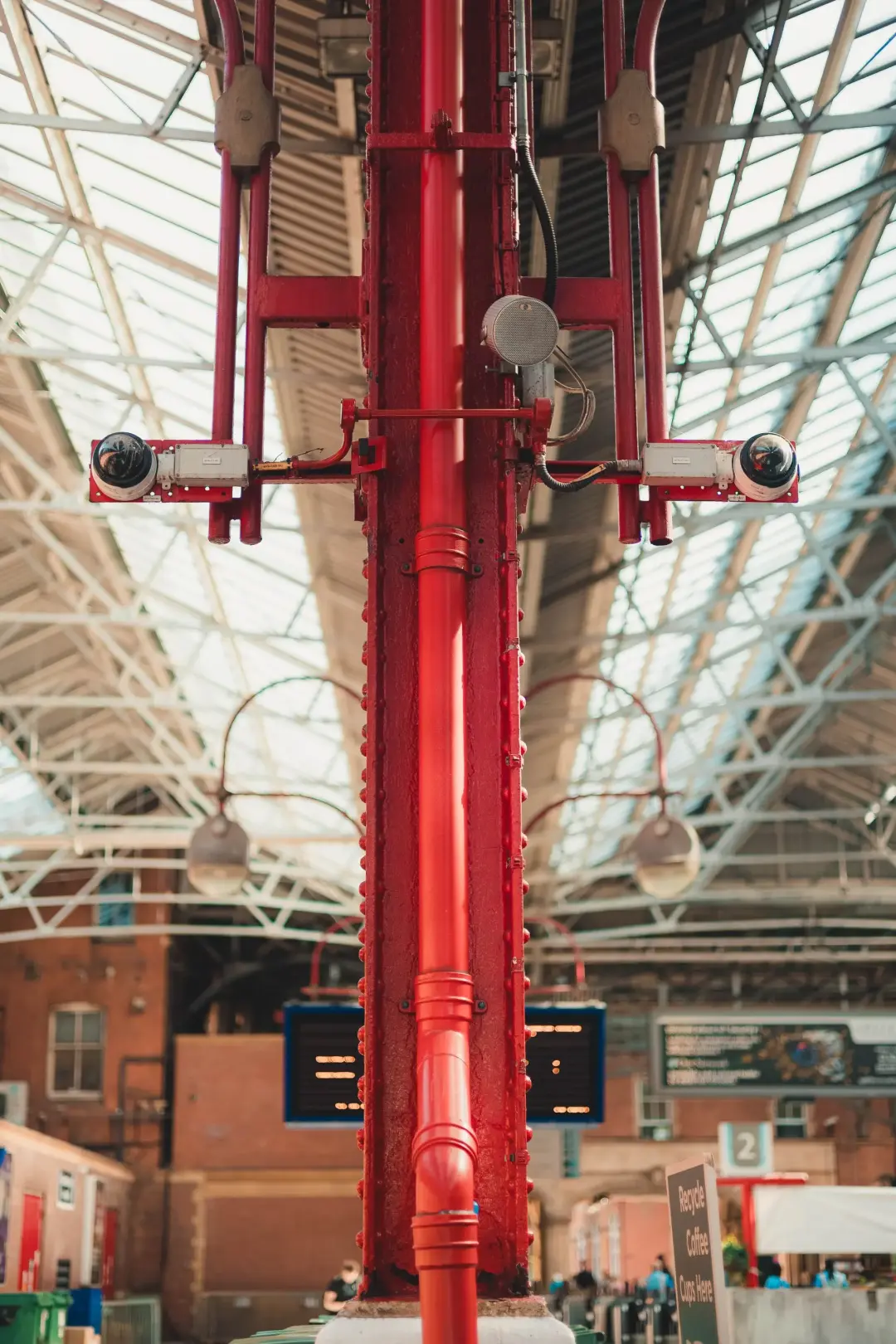
Lighting should be considered carefully. Indoor spaces may contain strong overhead lights, dark corners or areas where lighting is switched off when work stops. Outdoor areas may face low sunlight, vehicle headlights and deep shadows. A suitable camera should handle the expected conditions rather than only performing well in ideal light.
Using different cameras across a site does not mean the system should become difficult to manage. Where possible, equipment should work together through a common recording and viewing system. This allows authorised staff to monitor different areas in one place while still using camera types that are suitable for each location.
The Importance of Night Vision and Clear Images
Many industrial sites continue operating after dark, while others become more vulnerable once staff leave. Night-time image quality is therefore an important part of CCTV planning. Cameras should provide enough detail to show useful activity rather than only producing a rough outline of people or vehicles.
The distance that needs to be covered should be considered carefully. A camera may provide a useful night view close to a loading door but struggle across a large storage yard. Site lighting can support the camera system, but bright lamps and vehicle headlights can also create glare and reduce detail if cameras are positioned poorly.
Clear images are equally important during the day. A camera may need to show identifying details, equipment movement or vehicle activity. Resolution, lens choice, distance and lighting all affect the final result. Simply choosing a camera with a high stated resolution does not guarantee that every part of a large site will be clear.
Testing is essential. Cameras should be checked under the conditions in which they will actually operate, including darkness, rain and busy vehicle movements where possible. Adjustments to angle, lighting or settings can often improve results. A system should be judged by the useful information in its recorded footage, not only by technical figures listed on the equipment.
Monitoring Loading Bays, Entrances and Storage Areas
Loading bays are important areas for industrial CCTV because goods, vehicles and people move through them regularly. Deliveries and collections may involve valuable materials and several different organisations. Cameras can help create a clear record of when vehicles arrived, where they stopped and what activity took place.
Entrances are another priority. Main gates, staff doors, visitor entrances and service access points can all provide useful monitoring positions. Clear footage at these locations may help establish who entered or left the site and when. Cameras should be positioned to capture useful detail without being blocked by gates, vehicles or other structures.
Storage areas may require a mixture of wide and focused views. A wide camera can show general movement, while a focused view can monitor access to a secure store or valuable equipment area. Outdoor storage may be particularly challenging because layouts can change as materials are moved.
These locations should be considered together rather than separately. A person or vehicle may pass through the gate, stop at a loading bay and then move towards a storage area. Connected camera coverage can help show this full movement. This is often much more useful during an investigation than isolated recordings that leave large gaps between key parts of the site.
Remote Viewing and Real-Time Alerts
Remote viewing can help managers or security teams monitor an industrial site when they are not physically present. Authorised users may be able to view live camera images, review recordings and check particular parts of the property from another location. This can be useful for large organisations or sites that operate around the clock.
Real-time alerts can provide additional support. A system may be configured to respond to movement or activity in a restricted area, particularly outside normal operating periods. When a relevant event occurs, an authorised person can review the camera and decide whether action is needed.

Alert settings need careful adjustment on industrial sites because there may be frequent movement from staff, vehicles, animals, machinery and changing weather. Poor settings can produce too many unnecessary notifications. Detection areas and schedules should therefore be matched to the way each part of the site operates.
Remote access should be protected with strong security controls. Only authorised people should have accounts, and access should be removed when it is no longer required. The site should also continue recording if the external connection fails. Remote monitoring should provide an extra way to manage security, not create dependence on a connection that may occasionally become unavailable.
Storing and Managing CCTV Footage
Industrial CCTV systems can create very large amounts of recorded footage because they may use many cameras across extensive sites. Storage should therefore be planned carefully. The required capacity depends on the number of cameras, recording quality, operating hours and the period for which footage needs to remain available.
Different cameras may not need identical recording settings. High-risk areas such as entrances and valuable storage zones may justify greater image detail, while lower-risk areas may require less. Movement-based recording may reduce storage use in some locations, although busy industrial environments may trigger recording frequently throughout the day.
Footage also needs to be easy to search. If an incident occurs, authorised staff should be able to select the relevant camera, date and time without reviewing large amounts of unrelated material. Useful export tools are important when clips need to be saved for an investigation, insurer or relevant authority.
Access to recordings should be controlled. Industrial footage may show staff, contractors, visitors and sensitive business operations. Businesses should define who can view, export or delete recordings and keep these permissions under review. Important clips linked to an incident may also require secure backup so they are not replaced by later recordings.
Meeting Privacy and Legal Duties
Industrial CCTV must be planned with privacy as well as security in mind. Businesses should have a clear reason for monitoring each area and should avoid recording more than is necessary. Camera coverage should relate directly to risks such as site security, access control, safety or the protection of valuable assets.
Employees, contractors and visitors may all appear in recordings. The organisation should be clear about the purpose of the system and how footage is handled. Cameras should not be placed in locations where people reasonably expect a high degree of privacy unless there is a strong and lawful reason.
Rules may apply to signs, storage periods, access requests, sharing footage and other parts of CCTV use. These requirements can change, so industrial operators should check current guidance from the appropriate authority and obtain suitable professional advice where necessary. A policy written several years ago should not simply be assumed to remain correct.
Regular reviews can help confirm that every camera is still needed. Industrial sites change over time as buildings, processes and working areas are altered. A camera installed for a valid purpose may later become unnecessary or begin capturing a different area. Reviewing both the equipment and the reason for using it helps maintain responsible CCTV practice.
Why Professional Installation Is Important
These installations can be complex because of the size, layout and working conditions of the site. A professional assessment can identify areas where cameras are required, possible blind spots and suitable equipment for different environments. This is particularly valuable where buildings, machinery and outdoor storage create difficult viewing conditions.
Installation may involve long cable routes, high mounting positions and areas where normal working activities must continue safely. Equipment may also need protection from weather, dust, vibration or temperature changes. These points require careful planning before work begins.
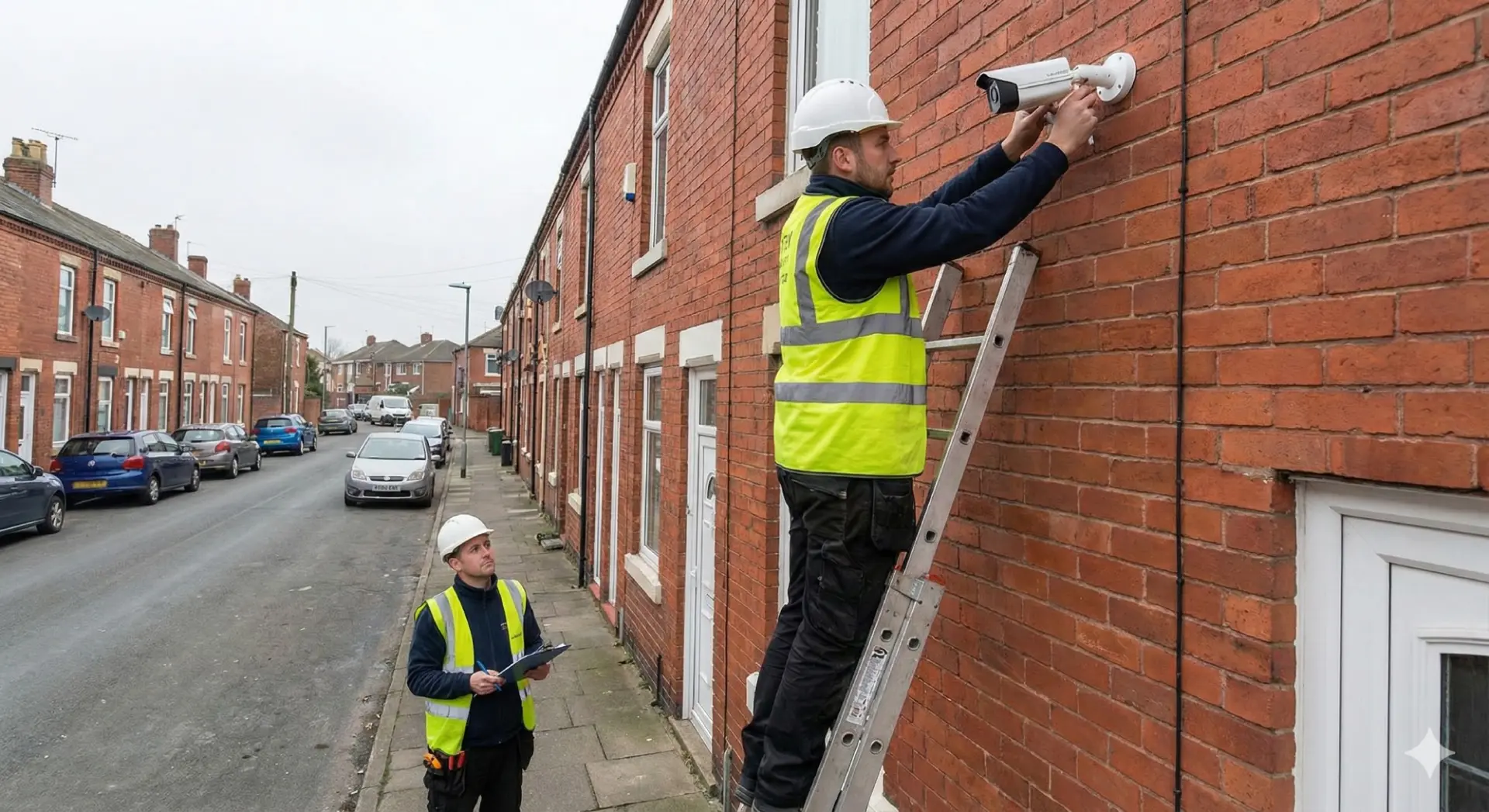
A professional installer can also test image quality in real operating conditions. A camera that appears suitable from a drawing may perform differently once vehicles, lighting and machinery are present. Testing allows viewing angles, settings and positions to be adjusted before the system is relied upon.
Good installation also supports future maintenance. Clearly planned cable routes, accessible recording equipment and properly labelled components make faults easier to find. Staff can also be shown how to search, review and export recordings. For complex industrial sites, professional design and installation help turn individual cameras into one dependable security system rather than a collection of separate devices.
Contact us today for industrial CCTV installations and security camera maintenance in Doncaster, Stainforth, and Auckley. Our team is available to help install brand-new CCTV camera for your homes and businesses, alongside any alarms or access control systems.